
How to Avoid Thirst in Ramadan: Water, Food and Electrolytes
Thirst is the part of fasting most people dread. You cannot drink during the day, so what you drink and eat between iftar and suhoor decides how the next afternoon feels.
The good news: a few habits make a clear difference. Spread your water, choose fluid-rich foods, keep salt down at suhoor, and know where electrolyte drinks fit.
- Drink steadily from iftar to suhoor; a large amount at suhoor alone does not carry you through the day.
- Soup, fruit, salad and yoghurt add fluid as well as food.
- Salty food at suhoor makes you thirstier during the fast.
- Plain water covers most days; electrolyte drinks help after training or long, sweaty work, and only in the eating hours.
- Dizziness, feeling faint or confusion means you need fluids now: stop fasting and get help if it does not pass.
Why thirst builds during the fast
Your body loses water all day through breathing, sweat and urine, and during the fast none of it is replaced until sunset. Three things make it worse:
- Salt. The British Nutrition Foundation explains that salt increases thirst, so salty food at suhoor shows up as thirst later in the day.
- Heat and effort. The British Heart Foundation notes a higher risk of dehydration in hot weather or with a physically demanding job.
- Catching up too fast. Drinking a large amount at once, especially just before dawn, is less useful than steady drinking across the evening.
Water contributes to the maintenance of normal physical and cognitive functions, and to normal regulation of body temperature, which is why the evening catch-up matters.
Spread your water from iftar to suhoor
The WHO Eastern Mediterranean office advises drinking at least 10 glasses of water during Ramadan. Spread across the evening, that looks manageable:
| When | Glasses of water |
|---|---|
| Iftar, with dates | 2 |
| With and after the main meal | 2 |
| Evening and after taraweeh | 3 |
| Before bed | 1 |
| Suhoor | 2 |
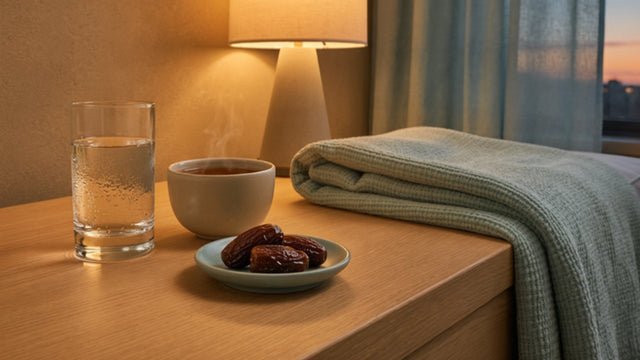
Keep a bottle within reach at home and in the car, and fill a glass by your bed for suhoor. If your doctor has told you to limit fluids, follow their advice instead.
Foods that help, and foods that make it worse
Help: soup, watermelon and green salad, as the WHO Eastern Mediterranean office suggests, plus yoghurt, fruit and vegetables, which the British Nutrition Foundation lists as fluid-rich. Cucumber, tomatoes and oranges are easy additions.
Make it worse: salty foods such as pickles, processed meats and salty cheeses, fried and processed foods, and very sugary drinks and sweets. Keep these small, especially at suhoor. Laban and yoghurt add fluid and protein, but check the label for salt.
For a full suhoor plan, see Healthy suhoor ideas.
The Bahrain angle
Ramadan 2027 falls in February, so most fasting days will be milder than a summer Ramadan. But many of us spend the day in air-conditioned offices and cars, which dry the air, and outdoor workers still sweat in the afternoon sun. If your job is physical or outdoors, plan your evening drinking with extra care and rest in the shade where you can.
Where electrolyte drinks fit
For most people, plain water between iftar and suhoor is enough, because meals also provide salts. Electrolyte drinks are most useful after a long or very sweaty training session, or a day of physical work. Like any drink, they belong in the eating hours.
- Electrolyte drink mixes list sodium, potassium and magnesium on the label. Magnesium contributes to electrolyte balance.
- Sugar-free flavoured drink mixes make water more appealing if you struggle to drink enough, but they are not electrolyte products.
- Oral rehydration solutions are for vomiting or diarrhoea; ask a pharmacist which suits you.
Our electrolytes ingredient guide explains how to read these labels.
Products mentioned in this guide
Chosen by the Healthana Team from label-checked products. Always read the label before use.


- Sodium and potassium per serving: is it an electrolyte drink or just flavour?
- How much water each sachet or scoop needs
- Sugar per serving
- Caffeine, which does not suit a drink late in the evening
Signs you need fluids now
Some thirst and a dry mouth by late afternoon are normal. The British Nutrition Foundation says that if you feel dizzy, cannot stand or feel disoriented, you should drink water (ideally with some sugar and salt), a sugary drink or a rehydration solution, moderately but urgently. If someone faints, raise their legs and give fluids once they wake.
Get medical help if symptoms do not improve, and speak to your doctor before Ramadan if you have kidney or heart conditions, diabetes, or take medicines such as diuretics. Read more in our hydration guide for Bahrain's heat. If thirst comes with a headache, see Headache during Ramadan.
Thirst in Ramadan is mostly decided the night before. Spread at least 10 glasses across the evening, eat soup, fruit and salad, and keep suhoor low in salt. Electrolyte drinks earn their place after training or a sweaty working day, not as a daily habit. And if you feel dizzy or confused, fluids come first.
Frequently asked questions
How much water should I drink between iftar and suhoor?
The WHO Eastern Mediterranean office advises at least 10 glasses of water during Ramadan. Spread them through the evening rather than drinking them all at once, and follow your doctor's advice if you have been told to limit fluids.
Which foods make you thirsty in Ramadan?
Salty foods such as pickles, processed meats and salty cheeses, along with fried and very sugary foods. Keep them small, especially at suhoor.
Do electrolyte sachets break the fast?
Yes, anything you drink does, so use them only between iftar and suhoor, mixed with the amount of water on the label.
Is laban good at suhoor?
Laban and yoghurt provide fluid and protein, which suits suhoor. Some laban contains added salt, so check the label and choose a lower-salt option if thirst is a problem.
Explore on Healthana
Label-first guidance, made for Bahrain
Every product on Healthana shows its label facts in English and Arabic. Not sure what suits you? Our team is happy to help.
Share