
Healthy Suhoor Ideas: 7 Meals That Keep You Going (and a Lighter Iftar)
Suhoor is the meal that carries you to sunset, and it is the easiest one to skip when the alarm goes off in the dark. A light, well-built suhoor means steadier energy and less thirst the next afternoon.
Below: what a good suhoor contains, seven ideas built from foods most Gulf kitchens already have, what to limit, and how to keep iftar lighter.
- Build suhoor from slow-release starch, protein and fluid-rich foods.
- Oats, wholegrain bread, eggs, beans, yoghurt and laban are simple, filling choices.
- Keep salty, fried and very sweet food small at suhoor; salt makes you thirstier.
- Open iftar with water and dates, pause, then eat a balanced meal slowly.
- Fibre plus enough fluid and a daily walk help keep you regular during the month.
What a good suhoor contains
- Slow-release starch: the British Heart Foundation suggests wholegrain starchy foods such as oats, bulgur or brown rice, for energy that lasts.
- Protein: beans, lentils, eggs and yoghurt add protein, which helps you feel full; protein contributes to the maintenance of muscle mass.
- Fluid: water, milk, laban and fluid-rich foods. The British Nutrition Foundation notes that yoghurt provides fluid, protein and calcium.
- Vegetables and fruit: cucumber, tomato and fruit add water and fibre.
The WHO Eastern Mediterranean office recommends a light suhoor every day, with vegetables, wholewheat bread, a protein such as dairy or eggs, and a side such as tahini or avocado.
7 healthy suhoor ideas
| Idea | Why it works |
|---|---|
| 1. Oats with milk or laban, dates and a few nuts | Slow-release starch, fluid and protein in one bowl. |
| 2. Foul with wholewheat bread, cucumber and tomato | Beans for protein and fibre; go easy on added salt. |
| 3. Eggs with vegetables and wholewheat bread | Boiled eggs or an omelette with spinach, tomato or peppers. |
| 4. Yoghurt with fruit and seeds | Fluid, protein and fibre; light if you cannot face a big meal. |
| 5. Wholewheat bread with tahini or avocado and tomato | A quick plate the WHO Eastern Mediterranean office suggests. |
| 6. Harees | Wheat with meat or chicken: filling and traditional. Keep salt and ghee moderate. |
| 7. Rice pudding with fruit | One of the British Nutrition Foundation's suhoor suggestions; use less sugar. |
Short on appetite or time? A glass of milk or laban, a banana and a handful of nuts is better than nothing. Some people add a protein drink; it should not replace a meal every day.
The Bahrain angle
Gulf suhoor tables often mix healthy staples with heavier favourites. Foul, eggs, laban, dates and harees fit well. Balaleet, sweet pastries and salty cheeses are better kept small or saved for iftar. If your household eats suhoor late, keep a quick option ready the night before, such as overnight oats in the fridge.
What to limit at suhoor
- Salty foods: the WHO Eastern Mediterranean office lists sausages, pickles and salty cheeses; the British Nutrition Foundation explains that salt increases thirst.
- Fried and processed foods, which are heavy and often salty.
- Very sweet foods and drinks, which give quick energy that does not last.
- Too much caffeine late at night, which can cut into your sleep.
Thirst is the hardest part for many people; our thirst guide covers drinks and timing.
A lighter iftar in three steps
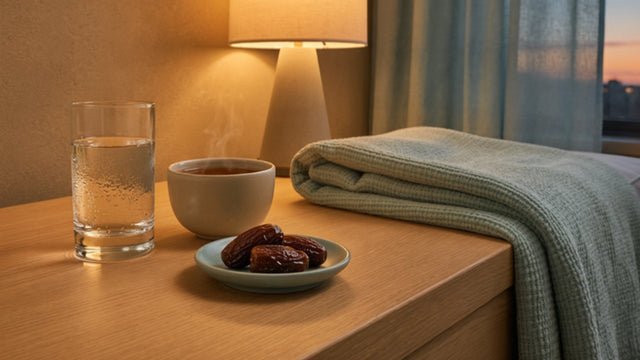
- Open gently. The WHO Eastern Mediterranean office suggests breaking the fast with three dates, along with water.
- Pause, then start with soup or salad. It adds fluid and slows the meal down.
- A balanced main, eaten slowly. Wholegrains, vegetables and lean protein. The British Heart Foundation suggests baking or grilling rather than frying, and paying attention to fullness.
Sweets and fried favourites are part of Ramadan; keep the portions small and choose fruit such as watermelon or melon on most nights.
Fibre and staying regular
The British Nutrition Foundation notes that changes in eating and lower fluid intake can cause constipation for some people during Ramadan. It suggests high-fibre foods such as wholegrains, bran, fruit, vegetables, beans, lentils, dried fruit and nuts, plenty of fluids, and light activity like walking.
If your meals are low in fibre, a fibre powder mixed into a full glass of water is one way to add some. Increase fibre gradually and always with enough fluid.
Products mentioned in this guide
Chosen by the Healthana Team from label-checked products. Always read the label before use.


- Salt per serving on bread, cheese, laban and ready meals
- Fibre per serving on cereals and breads
- Added sugar in drinks and desserts
- How much water a fibre powder needs
The best suhoor is the one you actually eat. Keep it simple: a slow-release starch, a protein, something fluid-rich and very little salt. Open iftar with water and dates, then eat a balanced meal slowly. Products can fill gaps, such as fibre when meals are low in it, but they do not replace real food.
Frequently asked questions
What is the best food to eat at suhoor?
A mix of slow-release starch (oats, wholegrain bread), protein (eggs, beans, yoghurt) and fluid-rich foods, with little salt. Oats with laban and dates, or foul with wholewheat bread and salad, are good examples.
Is a protein shake a good suhoor?
It can help on days you cannot face food, but a meal with wholegrains, fruit or vegetables gives fibre and longer-lasting energy. If you use one, take it with water or milk and something to eat.
How many dates should I eat at iftar?
The WHO Eastern Mediterranean office suggests three dates to break your fast, with water, before the main meal.
What helps with constipation during Ramadan?
High-fibre foods, enough fluid between iftar and suhoor, and light activity such as walking, as the British Nutrition Foundation suggests. If it lasts or is painful, speak to your pharmacist or doctor.
Explore on Healthana
Label-first guidance, made for Bahrain
Every product on Healthana shows its label facts in English and Arabic. Not sure what suits you? Our team is happy to help.
Share