
Your Ramadan Wellness Guide: Hydration, Suhoor, Sleep and Supplements
Ramadan moves your whole day: when you eat, when you drink, when you sleep and when you have energy to train. Most healthy adults fast without problems, and a little planning makes the month easier.
This guide brings it together in one place: how to spread water between iftar and suhoor, what a filling suhoor looks like, how to protect your sleep, when to train, and where vitamins and supplements fit into your eating hours. Each topic links to a longer guide.
- Spread water from iftar to suhoor instead of drinking a large amount at once.
- Do not skip suhoor: wholegrains, protein, yoghurt and fluid-rich foods help carry you to sunset.
- Keep salty, fried and very sugary foods small, especially at suhoor, because salt makes you thirstier.
- Anything you swallow belongs in the eating hours, so take supplements with iftar or suhoor, following the label.
- If you are pregnant, breastfeeding, have diabetes or take regular medicines, speak to your doctor before Ramadan.
Your fasting day in four windows
| Window | What helps |
|---|---|
| Iftar | Open with water and dates, then pause before the main meal. Eat slowly. |
| Evening | Sip water steadily, take a light walk, and have any supplements with your meal. |
| Suhoor | A light, filling meal with wholegrains, protein and fluid-rich foods; go easy on salt. |
| Daytime | Stay cool, keep effort moderate in the heat, and rest if you feel unwell. |
The World Health Organization's Eastern Mediterranean office suggests breaking the fast with three dates, eating a balanced iftar slowly, and eating a light suhoor every day.
Water: spread it, don't flood it
A long day without fluid means you start each evening behind. The aim is to catch up steadily: a glass or two at iftar, then regular glasses through the evening and at suhoor. The WHO Eastern Mediterranean office advises at least 10 glasses of water, and hydrating foods such as soup, watermelon and green salad.
The British Nutrition Foundation notes that mild dehydration during the fast is common and not considered harmful if you drink enough after breaking it. Feeling dizzy, unable to stand or disoriented is different: drink urgently and get help if it does not pass.
Read more: How to avoid thirst in Ramadan and, if fasting gives you headaches, Headache during Ramadan.
Suhoor and iftar in brief
Suhoor sets up your day. The British Nutrition Foundation suggests starchy, high-fibre foods such as oats or wholegrain bread, yoghurt for fluid and protein, and keeping savoury foods low in salt. Beans, eggs and laban fit naturally into a Gulf suhoor.
Iftar is a time to come together, and to avoid overloading after a long fast. Start with water and dates, build the main meal around wholegrains, vegetables and protein, and keep fried and sugary foods small.
Read more: Healthy suhoor ideas.
The Bahrain angle
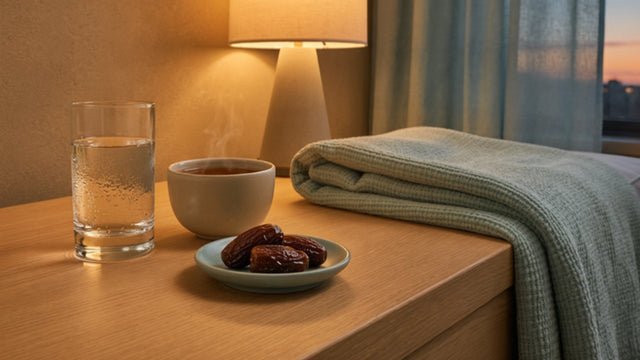
Ramadan 2027 is expected to begin in early February, when days are shorter and cooler than in recent summer Ramadans. Air-conditioned offices and cars still dry you out, and evenings fill quickly with family iftars and late nights. Keep a water bottle by your bed for suhoor, ask for grilled options at gatherings, and save heavier sweets for one evening rather than every evening.
Sleep and training
Late iftars, taraweeh and an early suhoor cut sleep into pieces. Many people do best with a core block of sleep after taraweeh, a short sleep after suhoor and, where possible, a short nap in the afternoon. Keep caffeine to the evening meal and away from bedtime.
For training, the British Heart Foundation suggests finding the time of day that works best for you and choosing gentler activity based on your energy. The WHO Eastern Mediterranean office encourages being active in the evenings and taking a regular daily walk.
Read more: Sleep in Ramadan and Training in Ramadan.
Supplements in Ramadan: when and how
Anything you swallow, including tablets, capsules, gummies and drinks, belongs in the hours between iftar and suhoor. Beyond that, the simplest rule is to follow the label.
- Pick the meal you never miss. Most supplement labels say to take them with food. For many people that is iftar, because suhoor can be rushed or skipped.
- Keep one routine. Taking a once-a-day product at the same meal each evening makes it easier to remember.
- Spread products out. If you take several, check the labels so you do not double up on the same vitamin or mineral.
- Hydration drinks count as drinks. Electrolyte sachets and fibre drinks go in the eating hours too, with plenty of water.
- Medicines are different. The British Heart Foundation advises speaking to your pharmacist before changing the timing of any medicine.
Vitamin D contributes to the maintenance of normal bones. Magnesium contributes to a reduction of tiredness and fatigue. Supplements do not replace a varied diet; they fill gaps in it.
Products mentioned in this guide
Chosen by the Healthana Team from label-checked products. Always read the label before use.


- "Take with food": pair it with iftar or suhoor
- Daily amount and the number of tablets per serving
- The same vitamin or mineral in more than one product
- Caffeine or stimulants, which do not suit late evenings
Who should check with a doctor first
Fasting is not required for people whose health could be harmed by it, and the decision is personal. Speak to your doctor before Ramadan if you:
- are pregnant or breastfeeding: the WHO Eastern Mediterranean office says the decision should be made individually with a healthcare provider
- have diabetes: the WHO Eastern Mediterranean office notes that people with type 1 diabetes are generally advised not to fast
- take regular medicines, or have heart, kidney or blood pressure conditions
- have been told to limit fluids
Stop fasting and get medical help if you feel confused, faint, have chest pain or cannot keep fluids down.
Ramadan goes best with a few simple habits rather than a cupboard full of products. Spread your water, never skip suhoor, keep salt and sugar in check, and protect your sleep. If you take supplements, keep them in your eating hours, at the meal you never miss, and read the label. And if you have a health condition, plan the month with your doctor first.
Frequently asked questions
When should I take vitamins in Ramadan?
Between iftar and suhoor, with a meal, as most labels advise taking supplements with food. Choose the meal you are least likely to skip, which for many people is iftar.
Do vitamins break my fast?
Anything swallowed during fasting hours, including tablets and gummies, is eaten or drunk, so keep supplements to the hours between iftar and suhoor. For medicines, injections or anything you are unsure about, ask a scholar and your doctor.
Should I keep taking my supplements during Ramadan?
Usually yes, just at a different time. Move them to iftar or suhoor and keep the dose on the label. If a supplement was recommended by your doctor, check with them about the new timing.
Can I take vitamin D at suhoor?
Yes, any meal in the eating hours works. Pick one meal and keep to it so you do not miss days, and use the amount on the label or the one your doctor advised.
Explore on Healthana
Label-first guidance, made for Bahrain
Every product on Healthana shows its label facts in English and Arabic. Not sure what suits you? Our team is happy to help.
Share